Adventures in Queens

May 13th, 2013

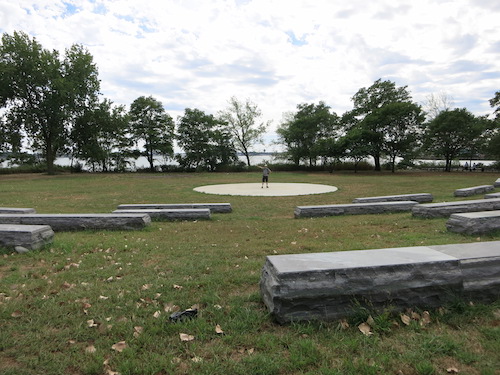
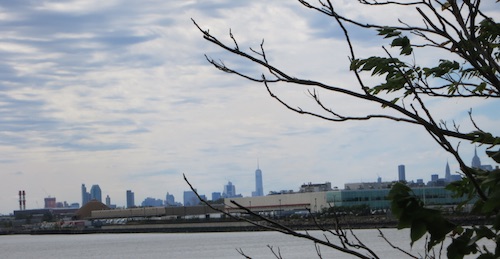
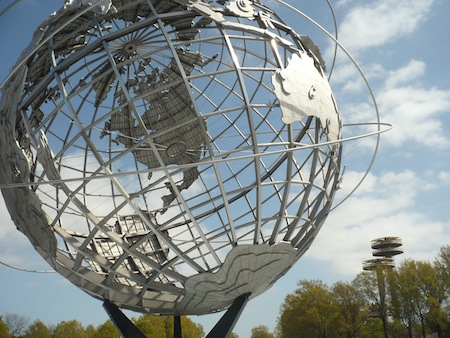
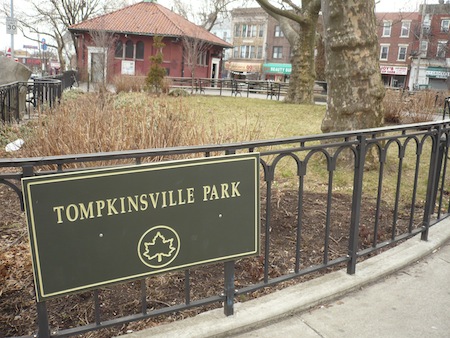
A busy day in Flushing Meadows Corona Park, the Queens Botanical Garden, and Flushing’s Chinatown on Cinco de Mayo.

Park Odyssey Visits Staten Island

March 12th, 2013

Finally touched base with Staten Island on my Park Odyssey blog. It was only a matter of time.

Berlin: A Journey into Modern History

November 9th, 2012

Full travelogue at Blogcritics. Enjoy!

Nine Days in Wales

April 14th, 2012

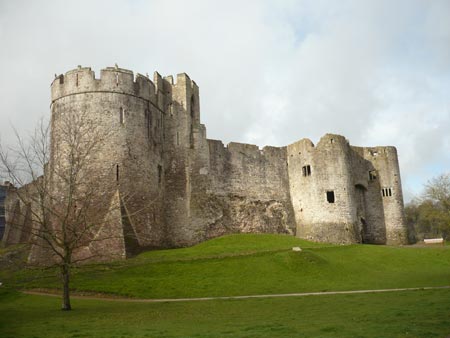
Full travelogue at Blogcritics. Enjoy!

Music Video for Whisperado’s “Teenage Popstar Girl”

April 14th, 2012

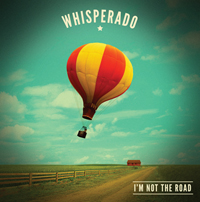
From our new CD I’m Not the Road. Video directed by Daniel Azarian.

CD Release Party!

March 8th, 2012

Well, it’s finally done. The new CD from Whisperado, I’m Not the Road, is here, and we’re celebrating Friday March 9 with a big show at Parkside Lounge. I hope to see everyone there.

Meanwhile, visit whisperado.com and check out the video for “Teenage Popstar Girl” directed by Daniel Azarian, starring Mary O’Rourke, Tara Langella, and of course, Whisperado.

Whisperado…The Sexiest Band in the World?

June 28th, 2011


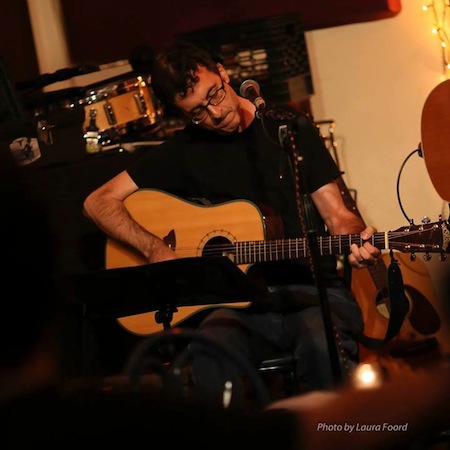
Here’s a photo, taken by cinematographer Milton Kam, of Whisperado at our video shoot the other day. The upcoming video, for “Teenage Popstar Girl,” is being directed by Dan Azarian. From left: Jeff Lampert (pedal steel), Jon Sobel (bass), David Mills (drums), Patrick Nielsen Hayden (guitar)

The Morton Report and More

May 17th, 2011

I’ve begun freelancing for The Morton Report, from celebrity biographer Andrew Morton. It’s a website of literate pop culture from both sides of the Atlantic, and I’m the New York City columnist keeping an eye on Broadway theater and related showy matters. My columns are here.

There are also some new entries at the Park Odyssey blog. So check them out too.

And everywhere you go, leave a comment!

Orchids!

April 8th, 2011

For my Park Odyssey blog I paid a visit to the New York Botanical Garden and saw the Orchid Show. All I can say is… Orchids! (And did you know the Bronx River is the only freshwater river in New York City?)

Also, check out my reports from Argentina. Glaciers. Icebergs. Steak. Dulce de leche…

The Shows Must Go On

January 29th, 2011

Nineteen-inch snowfalls can’t stop the theater. I’ve seen some good shows recently—check out my reviews (and my other articles) on Blogcritics.

Snow can’t put a halt to the Park Odyssey, either, though winter does slow things down a bit. Check out the latest in my ongoing project to visit and blog about every New York City park.

And Whisperado’s still working on that long-promised first full-length album. A couple of gigs coming up.

New Whisperado Page, and Gigs!

December 9th, 2010

I hope you haven’t forgotten about Whisperado! We’re still here, with a new web page (basic but functional) and two gigs coming up, one in Manhattan (to celebrate my birthday!) and one in Brooklyn. Check out the new page and come to the shows! We’ll see you there.

Park Odyssey Press Release

October 27th, 2010

FOR IMMEDIATE RELEASE
October 27, 2010

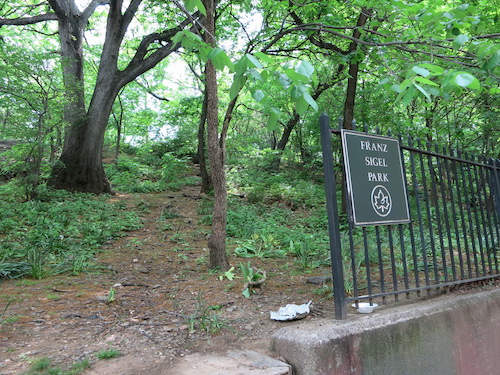
Jon Sobel, a Manhattan-based writer and musician and Co-Executive Editor of Blogcritics Magazine, has embarked on an unprecedented adventure: visiting and blogging every New York City park. He plans to document all 1,300 green spaces within the five boroughs.

“I already spend a lot of my spare time walking around the city, especially the parks,” Sobel says. “It’s astounding how many parks there are within the city limits. So this project combines my life as a writer, with my life as a lover of the outdoors. And nobody has ever done it before.”

Why 1,300? The roster of NYC Parks goes far beyond the famous ones like Central Park, Prospect Park, and Battery Park. The five boroughs are festooned with hundreds of parks of every shape, size, design, and purpose. Looking over the Parks Department’s website and other resources, Jon identified about 1,300 properties that seem to rank as actual parks (as opposed to pure playgrounds or mere grassy strips). He’ll visit, photograph, and blog about every park that’s at least partially laid out for passive enjoyment of the outdoors.

The more than 30 parks already featured on the blog, with text and photos, include:

-> Manhattan’s oldest park, Bowling Green, where it all began…
-> Brooklyn’s cannon-decked John Paul Jones park in the shadow of the Verrazano Bridge…
-> The city’s most celebrated green space, Central Park, captured in the winter snow…
-> Chinatown’s Seward Park, named for Lincoln’s Secretary of State (whose statue can be found much farther uptown in Madison Square Park)…
-> The fast-developing landscape of Governor’s Island, where preserved military housing stands side by side with cutting-edge art exhibits…
-> Gantry Plaza State Park on the Queens waterfront, where you can take in some of New York’s storied industrial history along with the sun’s rays…
-> And quite a few more.

“When I first conceived the project last year, I imagined that I could cover all the parks in one long summer season,” Sobel says. “Then I started to look into it more seriously—and upped my estimate to two years. And now that I’ve actually begun, it’s looking more and more like a multi-year exploration. But so is life, and what could be better than spending as much of life as possible outdoors, while still being right here in the greatest city in the world?”

Read the Park Odyssey blog here:

http://parkodyssey.blogspot.com/

Read the introductory post here:

http://tinyurl.com/3ypw677

Contact Jon Sobel at: orenhope@gmail.com

Park Odyssey Reaches 30 Posts

October 26th, 2010

I’ve now posted over 30 entries on my Park Odyssey blog, all with text and photos. Here’s a sample shot from Astoria Park in Queens. Come on over and visit now!

Indie Round-Up – Flipron, John Lee Hooker Jr., Whole Sky Monitor

September 17th, 2010

Flipron, With Breath Bated & Eyelids Unblinking: A Flipron Sampler

Flipron makes its US debut this fall with a brief tour and a 12-track sampler disc that backs up the hype that this is very likely the UK’s most inventive band. Sharp-witted, antic, and addled, their songs are more than pop curiosities; psychedelic but always under control, they show offbeat classic rock influences (circa Kinks and Bowie) mixed up with bleary folk balladry and elements from smaller islands as well, from Hawaii to Coney.

But all that is in the service of the songs and the band’s eccentric and intruiging sensibility. As vocalist and multi-instrumentalist Jesse Budd sings in the macabre-sweet “The Flatpack Bride of Possibilities,” “Each bone connected, each organ plugged in reveals another unexpected joy.” The compilation is full of unexpected pleasures, including the infectious “Gravity Calling” from their 2008 album of that name, the slinky “Big Baboon,” the arch “Mess It Up,” and the brand new single “The Coolest Names in Showbiz,” an unusually (for this band) straightforward gloss on fame: “You’re just doing what comes easily to you / Why bother? / The coolest names in showbiz love you / Why bother?”

Bother with Flipron. Anyone with a taste for new, original, boundary-stretching pop that’s just plain fun is unlikely to be disappointed.

John Lee Hooker Jr., Live in Istanbul Turkey

John Lee Hooker Jr.’s polished, contemporary blues is a far cry from the rough, elemental sounds of his legendary father. But in his own right, he’s a forceful presence, a skilled songwriter, and an honorable ambassador for the blues. He takes up that last role delightedly on his new live disc, recorded before an appreciative audience in Turkey. Like most of the tracks (except a couple of John Lee Hooker Senior covers), “Suspicion,” the BB King-style blues power ballad that opens the disc, is an effective original. The sounds range from Chicago blues-rock to soul to boogie-woogie to funk, with some clever arrangements like the tight, funny “One Eye Opened.” The songs cover topics from love (“You Make My Life Brand New”) to politics (“People Want a Change”).

When Hooker Jr. replays the standard bluesy complaints of the hard-up, he gives them a modern twist, with current idioms (“They Hatin’ on Me”) and cultural touchpoints, singing of Tiger Woods, recessions, and Ponzi schemes that promise “very large returns…but check out your bank account, because you’ve been burned.” He might not have the vocal heft or gravitas of some blues singers, but he knows how to put his entertaining story-songs across, and his band is top-notch.

Also included is an excellent, noirish animated video of one of the band’s best songs, “Extramarital Affair,” which recounts a true story of life on the road.

Whole Sky Monitor, Twisted Little Piggies

“The revolution was in your head,” shout these angry Leeds boys on this, their second disc. (The title of the album alone should give you a clue to the prevailing attitude.) “Never forget how stupid you are,” they plead. Primarily purveyors of highly focused noise, Whole Sky Monitor are not afraid to show a little soft white underbelly in the Beatle-esque “La Mouche,” but my favorite tracks are the short-and-sour numbers like the muscular “Freak Show” with its 7/4 time choruses, the chunky “My Regeneration” (get it?) and the punk-tempo “Abusive,” which clocks in at less than two minutes and suggests early Foo Fighters. I also like the dissonant jam in the uncharacteristically long “White Skin Suit.” Without much in the way of melodic hooks, these songs depend on a twin-guitar attack, rhythmic assertiveness, creeping dissonance, and pinpoint execution. All of which are here plentifully.

Originally published as “Music Review: Indie Round-Up – Flipron, John Lee Hooker Jr., Whole Sky Monitor” on Blogcritics.

On the Fringes of Fringe

August 27th, 2010

FringeNYC 2010 is drawing to a close. I caught a handful of shows, mostly ones that happened to be playing at days and times when I happened to be free. Here are links to my reviews:

One of the best I saw was The Hyperbolist, a one-man puppet-non-puppet show by Joe Mazza.

Alas, the gospel of the Rev. Bill & Betty failed to ignite.

But I was happy the Amsterdam Abortion Survivor survived to tell the tale.

A welcome performance of Schiller’s Maid of Orleans, a play I’d never seen, boasted a couple of fine performances but overall it disappointed.

However, Jeff Kreisler’s Get Rich Cheating, while hitting mostly easy targets, added up to entertaining and effective satire.

And in Jen and Liz in Love, Jesse Weaver cooked up an honestly touching story of love and regret.

Book Review: The Girls of Murder City by Douglas Perry

August 21st, 2010

Though subtitled “Fame, Lust, and the Beautiful Killers Who Inspired Chicago,” this concise and fascinating piece of social history by no means requires a familiarity with the Bob Fosse musical. It’s about crime in Chicago. It’s an effective portrait of the golden age of newspaper reporting. It’s a multiple character study. But more than anything it’s about the cult of celebrity. We tend to think idol-worshipping exploded in the late twentieth century, but it ran rampant in the 1920s, juiced up by the many competing newspapers that once graced major cities — and nowhere more so than in the Second City.

There, during Prohibition, a crop of female killers became celebrities. Maurine Watkins, a talented greenhorn reporter for the Chicago Tribune, covered the trials, filing incisive and sarcastic reports that made her a popular correspondent. Disgusted by the way all-male juries kept acquitting glamorous female criminals, Watkins then wrote a successful play based on her reporting. The stage play Chicago established her career (though she never again matched its success). Two movie versions followed. The first was silent; the second starred Ginger Rogers but bastardized the story to comply with the morality code of the 1940s, which didn’t allow characters to commit bad behavior and get away with it.

Not until after Watkins had died, though, did the Bob Fosse musical come about. Its current Broadway production has become the longest-running revival in Broadway’s history, and between that, the tours, and the Best Picture-winning 2002 movie version of the musical, an awful lot of people know the story, however obscure the original play may be today. But you need not know it at all to get a lot out of this book.

Perry neatly tracks the stories that splashed across the front pages of the Chicago papers in 1924. “Beautiful” Beulah Annan, immortalized in the play as Roxie Hart, and sophisticated Belva Gaertner, the inspiration for the character of Velma, were only the most glamorous of a number of female prisoners who had murdered men, usually lovers or husbands. Perry’s account of their crimes and their trials shines a light on the attitudes of the time, so different from now. Women weren’t thought fit to serve on juries — they couldn’t be objective enough. And they weren’t tough enough to be trial lawyers, though the book also profiles a trailblazing young attorney named Helen Cirese who successfully represented the unglamorous convict Sabella Nitti.

For similar reasons, many people believed women couldn’t commit crimes unless something — drink, passion, the loose living that was blamed for so many problems at the time — had led them astray. “Violence, after all, was an unnatural act for a woman. A normal woman couldn’t decide to commit murder or plot a killing…The violent woman was by definition mentally diseased, irreparably defective.” Beulah had been “lured into the world of jazz and liquor, had broken her marriage vows, like so many young married women forced by financial necessity to work outside the home.” A “respectable lady [like Belva Gaertner] who shot her husband or boyfriend…didn’t scare men: She was a romantic figure, a representation of how much women in general, with their overflowing emotions, loved and needed their men.”

Maurine Watkins, intelligent, moral, and religious, couldn’t accept this, and crusaded in print for the women she believed guilty to get what they deserved. But, though the string of acquittals had been broken in another case, both Beulah and Belva got off despite strong evidence against them. In the process, even their lawyers became celebrities. Hearst’s sensationalizing papers, according to Perry, “sought to mold news to their liking, which meant the commonplace blown up bigger and better than in any of their competitors.” The “commonplace blown up”…just like today’s reality shows. Tens of thousands of strangers swarmed upon the funeral of Wanda Stopa, another beautiful killer who’d avoided trial by committing suicide — “group madness, a sight so incredible, it stayed with the reporter for years.” It led Watkins from Chicago to Chicago, “a deeply cynical satire of the celebrity mania that she saw as the dominant feature of twentieth-century urban life.” Perry’s analysis of the play’s genesis sums up both its theme and, to a degree, that of this book:

From her experiences as a reporter in Chicago, she’d determined that human imperfections, individual and collective, had become monstrous. Real life had become farce…traditional comedy and farce…comedy and tragedy…were all one and the same in a superficial modern world of mass communication and overpopulated, spirit-crushing cities, a world that produced anonymous men and women seized by insecurity and a frantic desire for money, status, and attention.

We know how straight-laced society reacts. From Mae West’s 1927 conviction for doing a “kootchie dance,” through Jim Morrison’s 1969 arrest in Miami for exposing himself, to the bizarre excoriation of Janet Jackson for her “wardrobe malfunction,” America has always been an uncomfortable mix of the puritanical and the freewheeling and licentious.

Maurine never wanted her play made into a musical. Perry isn’t sure why, but he makes a convincing case against a commonly supposed reason: that she’d become a born-again Christian and ashamed of having sensationalized the lurid stories she’d reported on. Maurine Watkins was religious all her life; she was never “born again.” And she hadn’t sensationalized and glamorized the murderesses; to the contrary, she’d tried her hardest to turn the tide against Beulah and Belva. This book, among its other accomplishments, restores and buttresses the reputation of Maurine Watkins, who for a brief shining moment was the top crime reporter of her day, and then turned her experiences into a bitter, cynical, but eternally fresh and powerful piece of our culture.

Originally published as “Book Review: The Girls of Murder City: Fame, Lust, and the Beautiful Killers Who Inspired Chicago by Douglas Perry” at Blogcritics.

Music Review: Indie Round-Up – Levasseur, The Problems, Lisa Brigantino

August 18th, 2010

Treasa Levasseur, Low Fidelity

Every so often—and not so often, really—a really special recording comes across my desk. Treasa Levasseur’s second disc has been out in her native Canada for a couple of years but is just now about to get a US release, and if we didn’t know we needed a true soul music revival, now we do. Low Fidelity is an excellent combination of smooth, soulful grooves, bluesy riffage, and ballsy singing and attitude, all melded together with pointed and (above all) fun songwriting.

Its ten tracks, almost all originals, draw on many of soul’s flavors: Aretha-style ballads (“Rest of the Ride”), piano-heavy Motown (the title track), Philly soul (“Talk to Me Babe”), Buddy Guy-style minor-key blues (“Good Ones Never Share”), gospel (“Amen”), even a bit of Sade-type gentle jazzy funk (“Truth Will Set You Free”). My favorite might be the New Orleans-y “Big Fat Mouth,” but there’s no weak link on the album. And while the above description might suggest a dilettantish collection of distinct styles, that’s not at all what this is. Levasseur’s powerful but crafty sensibility as a singer and songwriter shines steadily throughout this solid through-and-through album.

The Problems, Powder Blue Bone

Urban folk-rock meets rootsy Americana on The Problems’ fine new disc, with Frank Caiafa’s gravelly grey baritone vocals floating over beds of steady drums (courtesy of the excellent Barbara Corless), plinking banjo, guitars, and sundries. A variety of feels, including driving rock (“Damage Done”), are tied together by an the overall easygoing attitude established by Caiafa’s laid-back singing, even on more energetic tracks like “The Other One” and “Together.” The latter songs feel a bit like Steve Earle in one of his happy moods, or maybe John Prine on speed. And then there’s the uncharacteristically dramatic, Dire Straits-like “Walk Under Ladders.” On some songs you have to lean in if you want to make out the lyrics, but that’s quite all right—the mixture of grit and sweetness is what sets The Problems apart.

Lisa Brigantino, Wonder Wheel

Lisa Brigantino is what you’d call a complete musician—a superb multi-instrumentalist, singer-songwriter, and not least, rocker. Listen to the pounding guitars and odd time signatures of “Go and Find It” and you won’t be at all surprised to learn that she used to be part of the all-female tribute band Lez Zeppelin, but she can rock out with just voice and acoustic guitar too, as in “Used To Be a House,” the most intense track on her new disc. “Aqualung”-like, it paints an affecting picture of homelessness.

The Dixie Chicks meet Simon and Garfunkel in the angelic harmonies of “Sarah,” while “A Little Sympathy” recalls melodic 1970′s pop-rock. Key word: “melodic.” Brigantino brings to her songwriting that real sense of melody that so many putative writers lack, whether it’s on a softie, like the folksy “Those Days” and the lovely “Light of Your Face,” or in more out-there fare like “I Gotta Find Me Somethin’,” where Dixieland meets the Andrews Sisters. The second half of the disc has one or two too many confessional ballads for my taste, but I think that’s just because the rockers make me want a couple more rockers.


Originally published as “Music Review: Indie Round-Up – Levasseur, The Problems, Lisa Brigantino” at Blogcritics.

Theater Review: The Barker Poems: “Gary the Thief” and “Plevna”

August 10th, 2010

Maybe it ought to go without saying that one should go to the theater prepared to pay attention. But it doesn’t anymore, not when screen-conditioned young people no longer have the attention span to serve on a jury. So, fair warning: Potomac Theatre Project’s current production of The Barker Poems—two long poems by Howard Barker read as dramatic monologues—requires sustained attention. It’s shy of an hour long, but that’s a fair stretch when close listening is mandatory. This isn’t a production that will hit you over the head and drag you along with it. Don’t go sleepy; you’ll need your serious brain to meet Barker’s serious language.

Primarily a playwright, Barker proves a really fine dramatic poet as well. To start, the wondrous Robert Emmet Lunney performs “Gary the Thief,” which follows said thief through an epic series of existential adventures as he’s arrested and imprisoned. “I live among you/Hating you,” he addresses us; “I charm you/With the ease of one who holds/All effort in contempt.” Mr. Lunney’s performance does indeed seem effortless. Breezed from mood to mood by subtle, perfect lighting (Hallie Zieselman) and directed deftly by Richard Romagnoli, Lunney makes Gary a delightful, philosophical, and slightly dangerous rascal. A bit of a low-class Ulysses, he rises above and burrows below what regular folks seem to expect of him: “I ride History lightly as a leaf/On torrents which wash away the/Gates of prisons and of parks.”

Ultimately he seems to experience a kind of revelation, or passion, but his consistent sureness of himself keeps the ending ambiguous: if Gary can’t learn (“I did this for knowledge/But nothing came of it”), can he overcome? Is there anything to overcome? Perhaps only our skepticism about him. About whether by himself he can sustain our rapt interest for half an hour and take us somewhere we’ve not been before. Mission accomplished.

The second poem, “Plevna,” comes to us through the rapid-fire delivery of Alex Draper, who was so fine as Alan Turing in Lovesong of the Electric Bear. Subtitled “Meditations on Hatred,” the work is named for a Bulgarian city that was the site of a long siege in the Russo-Turkish War of the 1870s, but Plevna stands in for all sites where the horrors of war rear up. Jarringly, our narrator has just stepped away from a cocktail party. Still nursing his drink, he brings us various points of view: “The hem of his [the priest's] cassock is stained/From the blood of horses…The emperor witnessed the decimation/From a platform made of planks…[Alexander] will not see death in such abundance/Or pain in such garlands again…” And the Sultan “is silent/Staring across the Straits/A cruiser made in South Shields unzips the placid pond.”

It’s a disturbing, at times bewildering ride, and in the end less successful as a piece of drama than “Gary.” It’s true that Mr. Draper, while bringing great liveliness to his performance, occasionally swallows a line. But in essence it’s not the fault of the performer or the crew. I think it’s simply that we read of war every day. We’re bombarded with new and old knowledge of atrocities here, there, and everywhere, world without end. We simply don’t need this, even from as great a writer as Barker, as much as we need the individual and irreproducible meta-yarns of Everyman-oddities like Gary the Thief, which can challenge our stodgy ways of looking at our violent and beautiful world.

What we do need, though, is more thought-provoking theater like this. As I said, don’t go sleepy. But go. The Barker Poems ran in repertory through August 1.

Photo by Stan Barouh


Originally published as “Theater Review (NYC): The Barker Poems: “Gary the Thief” and “Plevna”” at Blogcritics.

Music Review: Indie Round-Up – Karling, Alguire, McVey

August 9th, 2010

Karling, Bound for Nowhere

Karling Abbeygate picks up where she left off, but this time with all original songs. Her new set of 14 pseudo-old-time country numbers are by turns Patsy Cline-style traditional (the excellent “What Another Lovely Day” and “Can’t You See I’ve Fallen”), rockabilly (“Dig Baby Dig!”), loopy “Crazy Mable” (sic), and even touched by disparate styles like Dixieland and carnivalia.

Working with two different studio bands, one with traditional country-western instrumentation and the other featuring Micah Hulscher’s aggressive organ playing, Karling covers a variety of bases with a single steady, one-of-a-kind stride, even if that stride may at times seem to have issued from the Ministry of Silly Walks. Her unusual vocal delivery sometimes feels more Asian than plantation, a kind of kewpie-doll belt that serves some songs better than others but is certainly fearless.

Other highlights include the torchy, tinkling ballad “The Valley,” the bouncy “Right Side,” and the sad and peculiar “Take This Take This.” And some songs, like “Back in My Baby’s Arms,” really sound like they could have been written in the 1920s.

Trevor Alguire, Now Before Us

The Canadian country singer-songwriter is back with a strong follow-up to his fine Thirty Year Run. Many of these songs are very traditional-sounding, but Alguire uses country’s typical sounds and song structures forthrightly, without pretense or self-consciousness, and the songs roll easily into your brain on the magic carpet of his honeyed baritone. “Are You Ready” evokes the cycle of life and announces we’re deep in the roots of where all words and music come from: “Are you ready…for your life to come full circle/And never be the same again?”

There are just enough surprises—like the time change in “Back Roads,” the warm bluegrass two-beat of “Pen a Man Down”, and the hollow Neil Young rawness of the spacious “Ditch by the Road”—to make the almost too-nice arrangements of the most traditional country-western songs welcome. In “Weeping Willow” he shows he can rock; Steve Marriner brightens up the already energetic “Hands Full of Flowers” with his barrelhouse piano tinklings; and a pretty duet with Kelly Prescott closes the proceedings. Not every song is thoroughly memorable, but Now Before Us is a great-sounding all-around good show.

John McVey, Unpredictable

The best of John McVey’s soulful pop suggests the spirit of Joe Cocker and Marc Broussard. Gentle ballads and midtempo country-rockers give way now and then to an acoustic softie like the title track and a bit of gentle Sting-like funk as in “The Con Man’s Easy Chair.” There’s nothing much unpredictable about the easygoing, accessible tracks that make up Unpredictable—with the exception of some unexpectedly literate lyrics.

McVey’s creativity does seem to peter out on the second half of the disc. The a capella closer, “Lay Your Burden Down,” aspires to break out of predictability, but his lead vocals here give way to an occasional tendency to get too careful and lose spirit. Overall, though, all you’ll need are a modest tolerance for the sentimental and a willingness to shed your ironic shell in order to enjoy the best of this spacious, well-crafted music.


Originally published as “Music Review: Indie Round-Up – Karling, Alguire, McVey” on Blogcritics.

Park Odyssey Blog Launches

August 7th, 2010

My new project is underway: visiting every single park in New York City and documenting them on a new blog, Park Odyssey. Check it out.


Jefferson Market Garden, August 2010